This is Not a Recipe: Khao Piak Sen
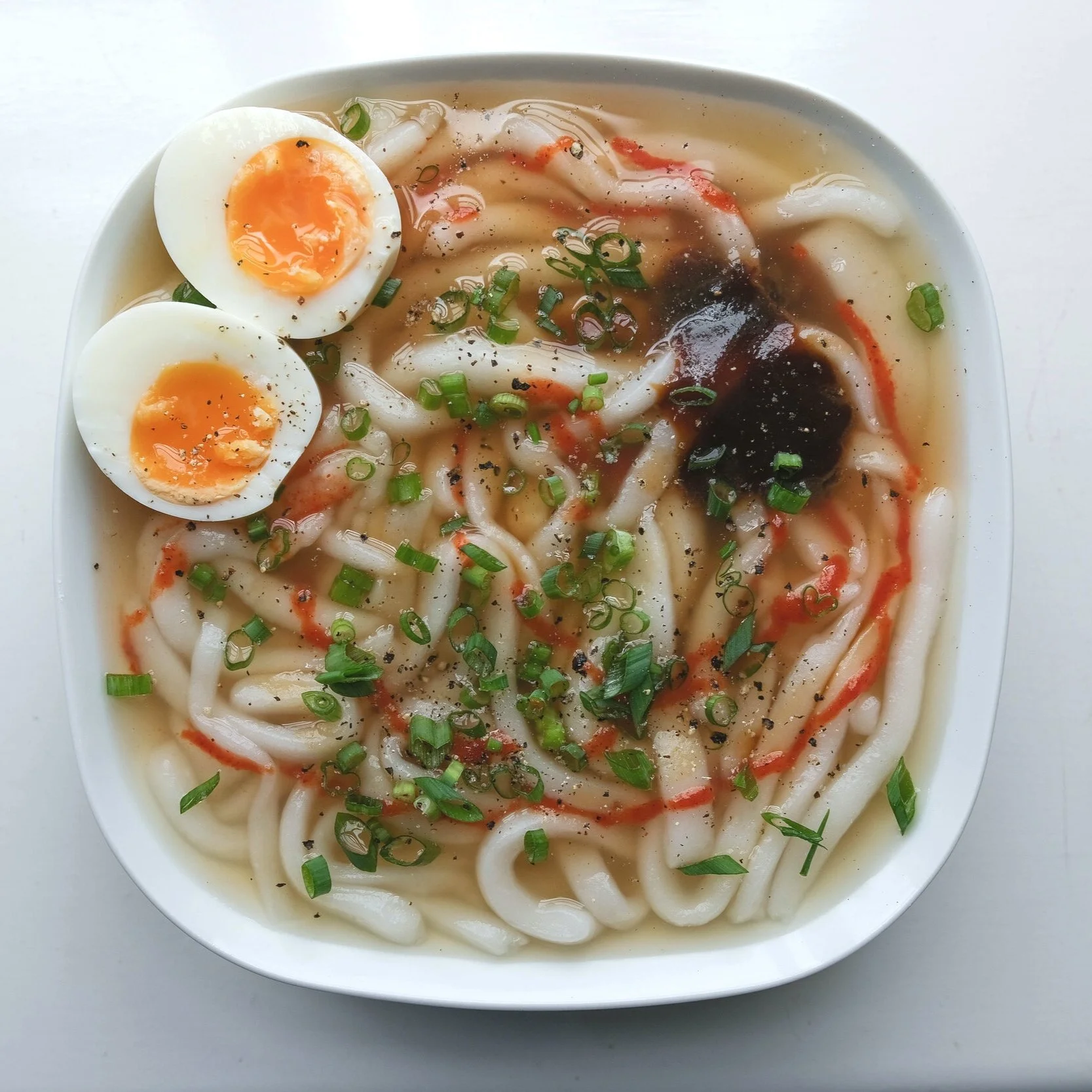
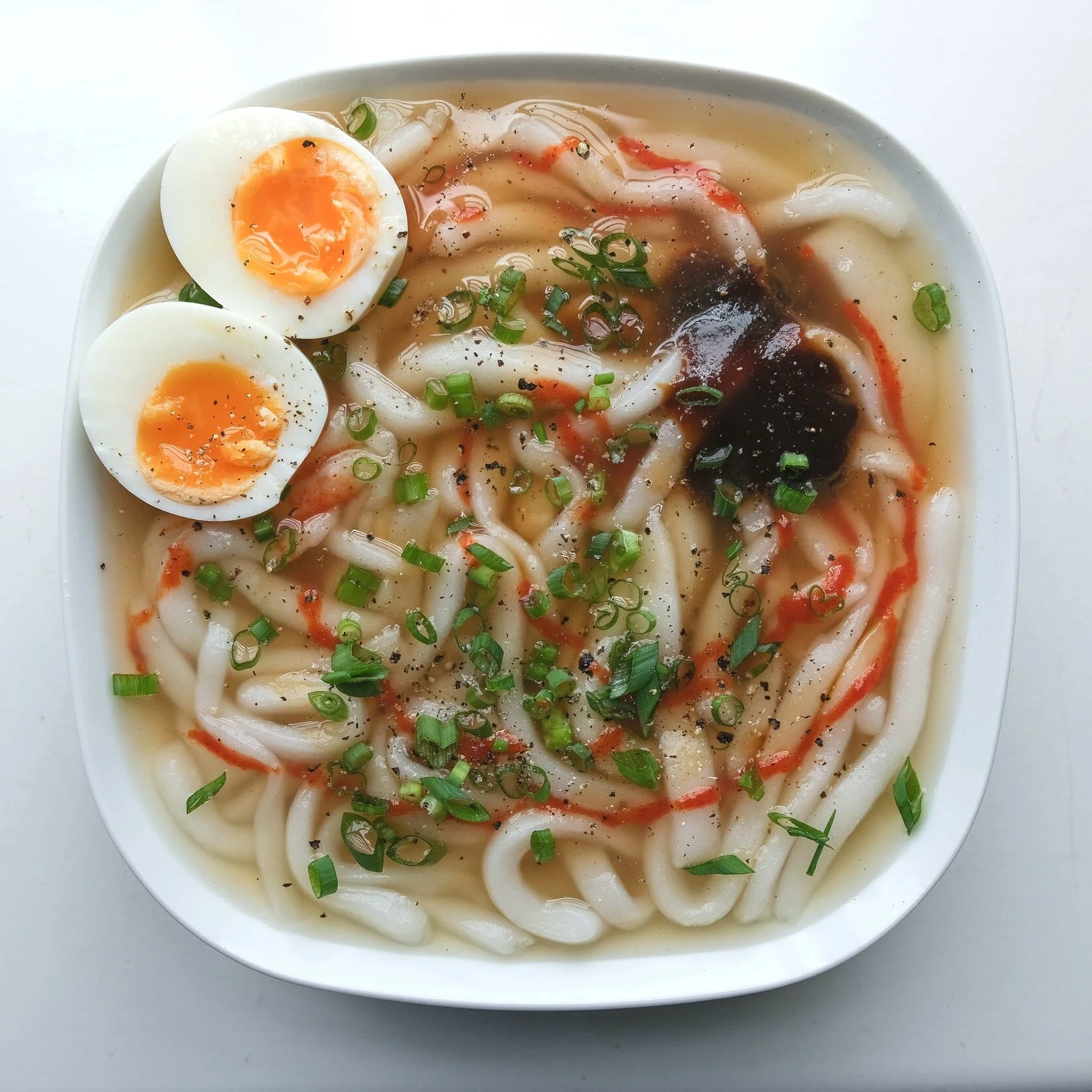
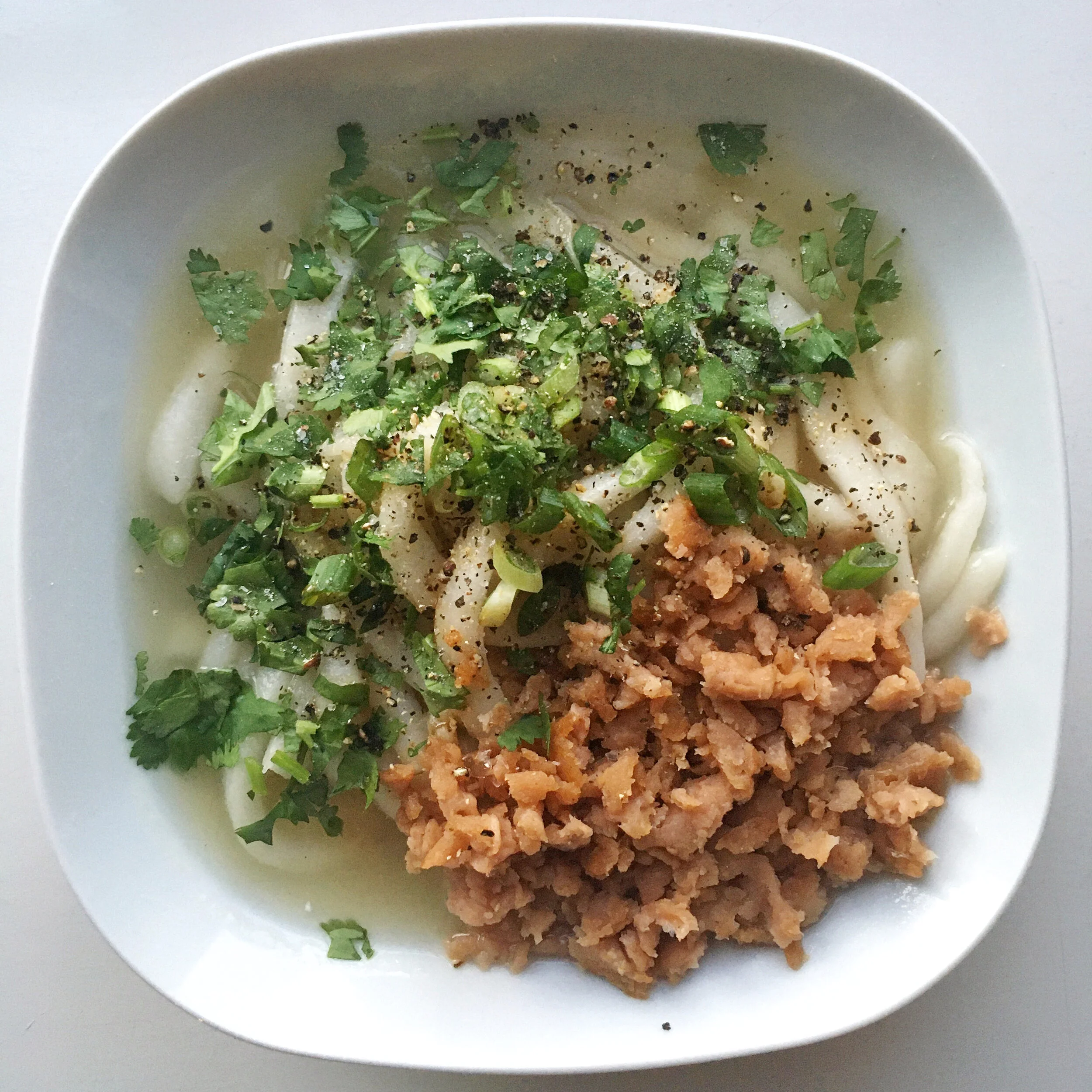
Khao Piak Sen - This was Aaran’s bowl.
If you know me you know I love cooking and baking. Having been in England for two months now, I’ve been trying to cook things to cure homesickness. I recently made Khao Piak Sen and Aaran loved it so much I thought it’d be worth writing about for our future reference (and anyone else who wants ideas for a veg version).
This is not a recipe. It’s more of a detailed suggestion. Mostly because we don’t own any dry ingredient measuring tools (yet), and are living with minimal household/kitchen items, but also because I’m an emotional cook and measure according to what I want and what feels right. I’d say, at best, it is a sort of sketch for a vegetarian version of a Hmong version of a Lao noodle soup. This is my favourite soup ever. It’s better than pho - fight me. My family makes this dish at least once a year and since it’s only good if you make the noodles fresh, from scratch, you only get to eat this if 1) you make it yourself; or 2) someone REALLY loves you and makes it for you because it is labor intensive. I love being able to share this dish with Aaran and appreciate that he loves it as much as I do because it makes me feel that much closer to the people and place where I was born and raised: Hmong Minnesota.
Servings: 2-4
Broth:
1.50 Liters of Water
Chicken flavor bouillon (your preference of brand, mixed according to instructions)
1 stalk of lemongrass
Ginger (as much or as little as you prefer)
Half a large onion
2-3 cloves of garlic
Noodles:
About 200g Tapioca flour/starch (half the package)
About 225g Rice Flour (half the package)
2-4 Cups of BOILING water
Method:
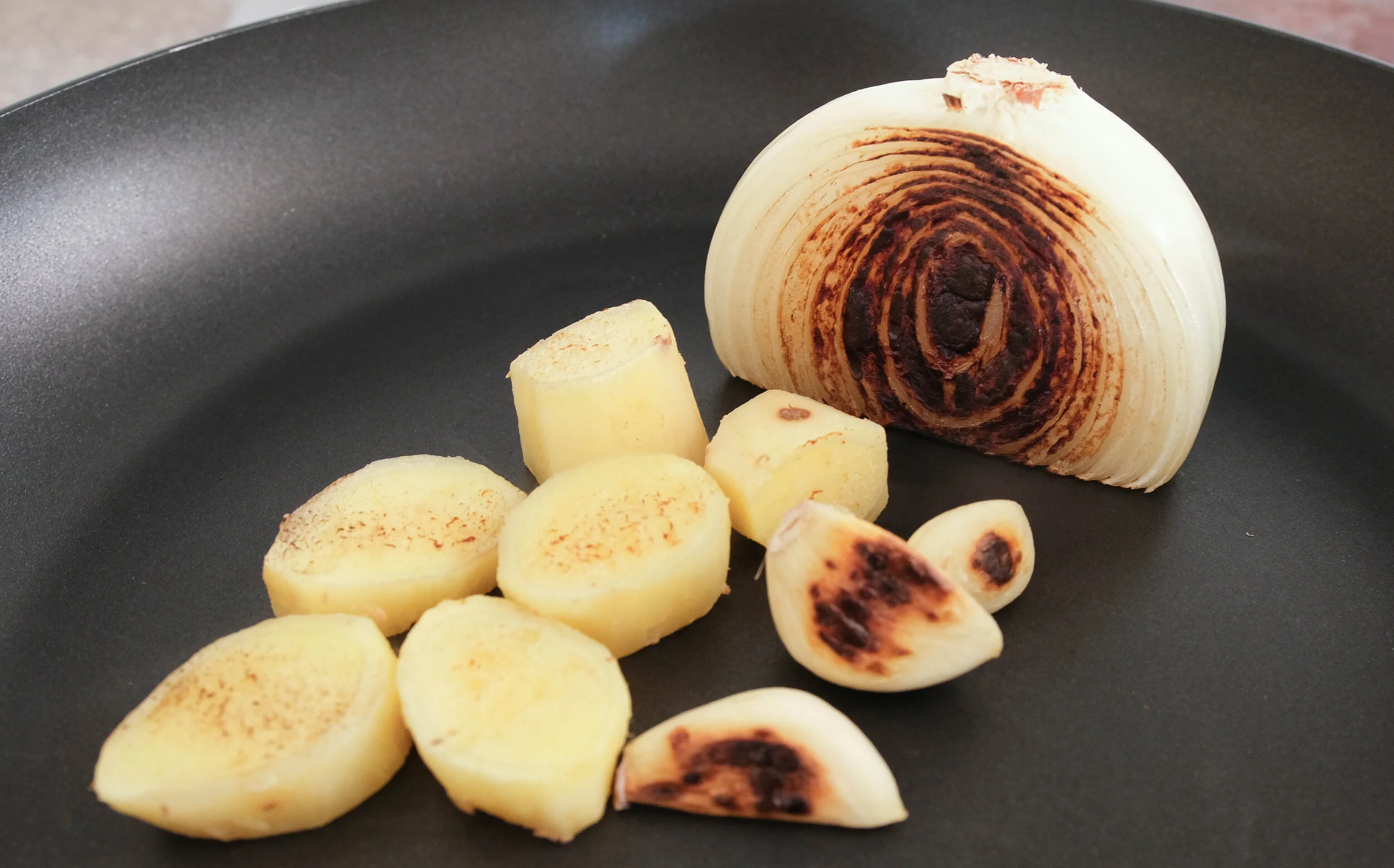
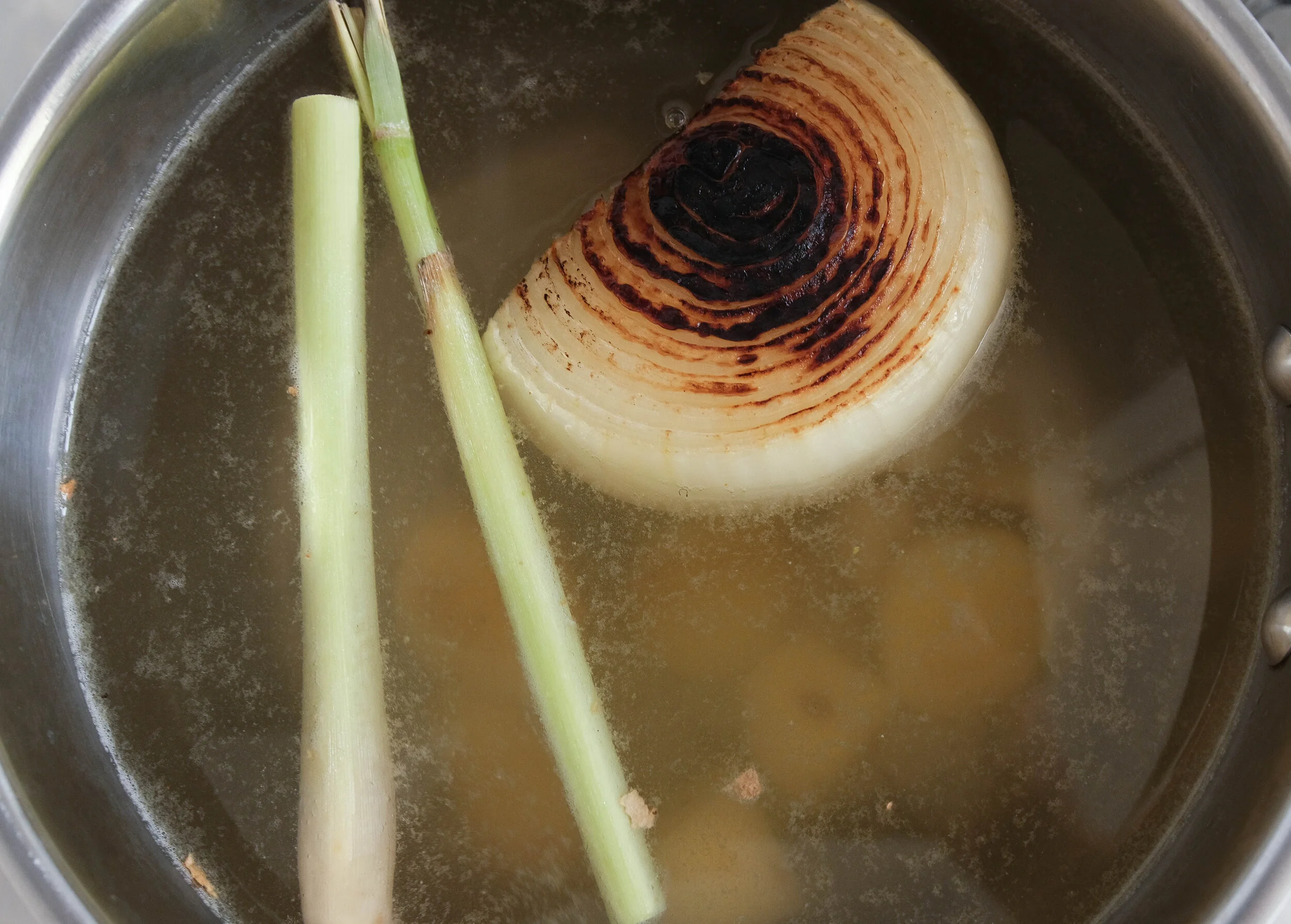
Start with the broth by charring the onion, garlic, and ginger in a dry pan to bring out the flavors, put them in a pot with the water and bouillon, bring to a boil, cover with a lid and turn it down to a simmer for about an hour.
Pictured are tapioca flour, rice flour, and glutinous rice flour. A few notes about the ingredients: 1) make the noodles without glutinous rice flour, I used glutinous rice flour to test my mom’s recipe but I think just tapioca flour and rice flour make a foolproof dough; 2) I’m using Erawan brand tapioca starch because that’s what I could find but prefer the Cock brand tapioca starch (white packaging with green print).
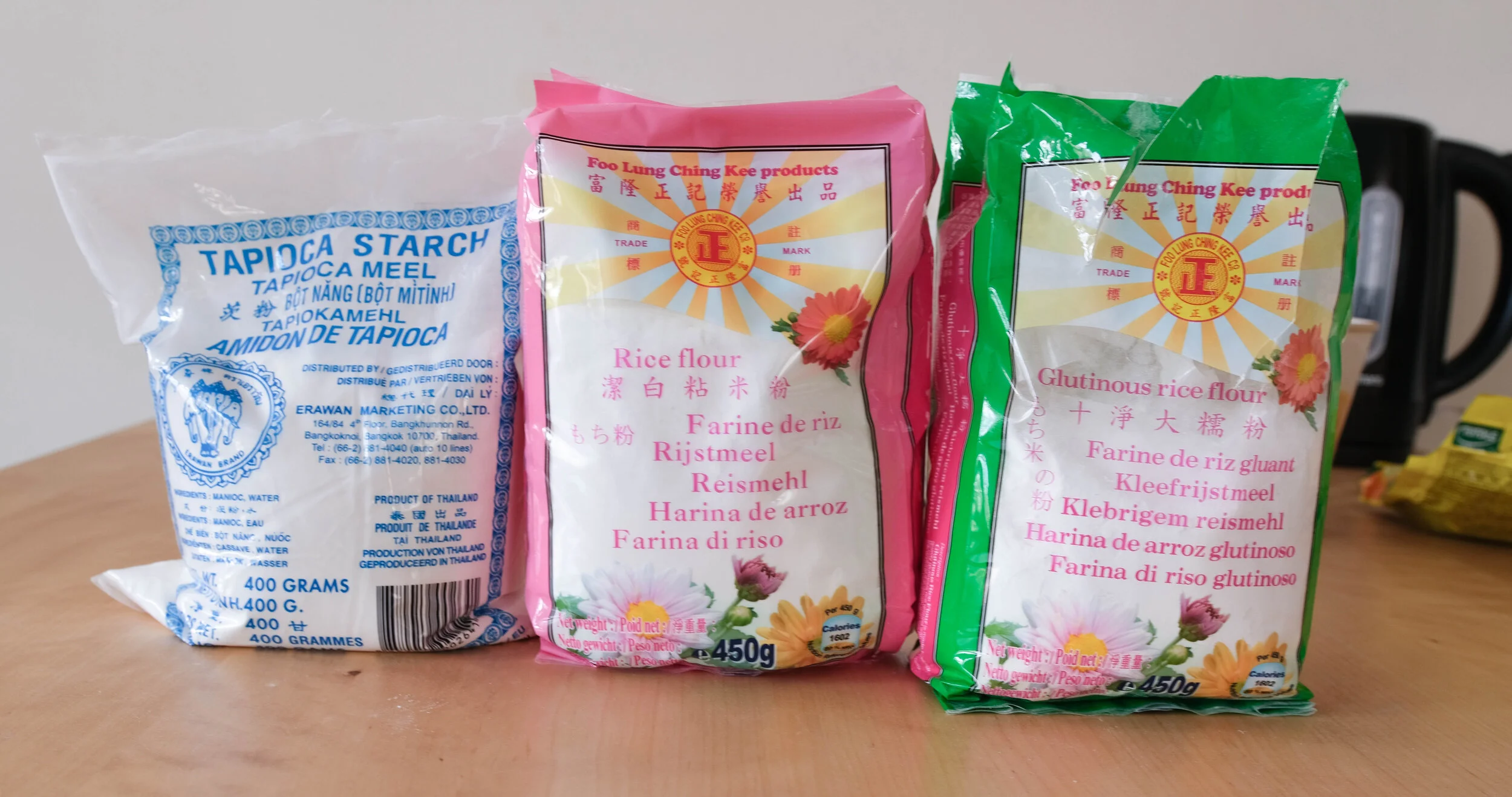
All you need are the two on the left.
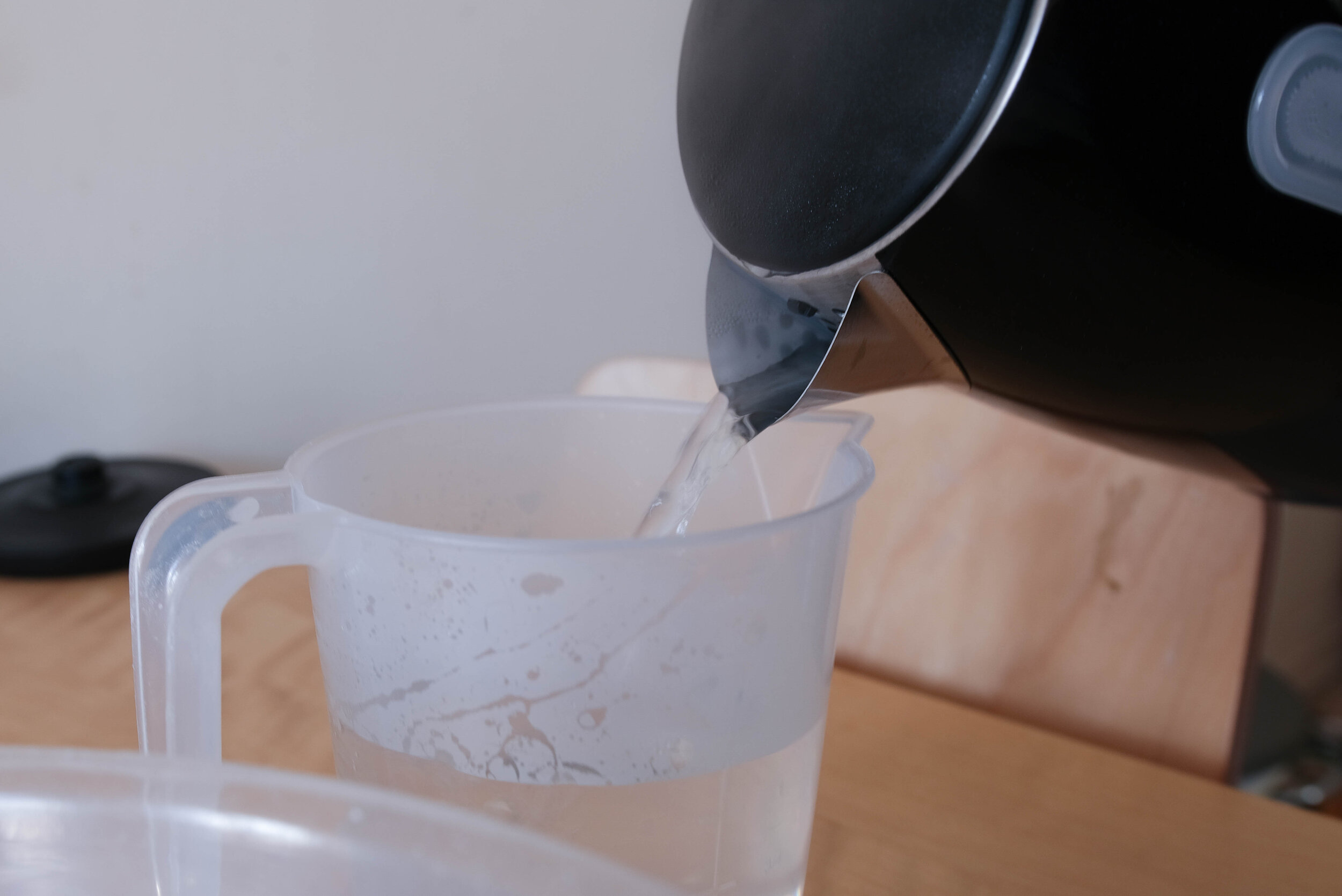
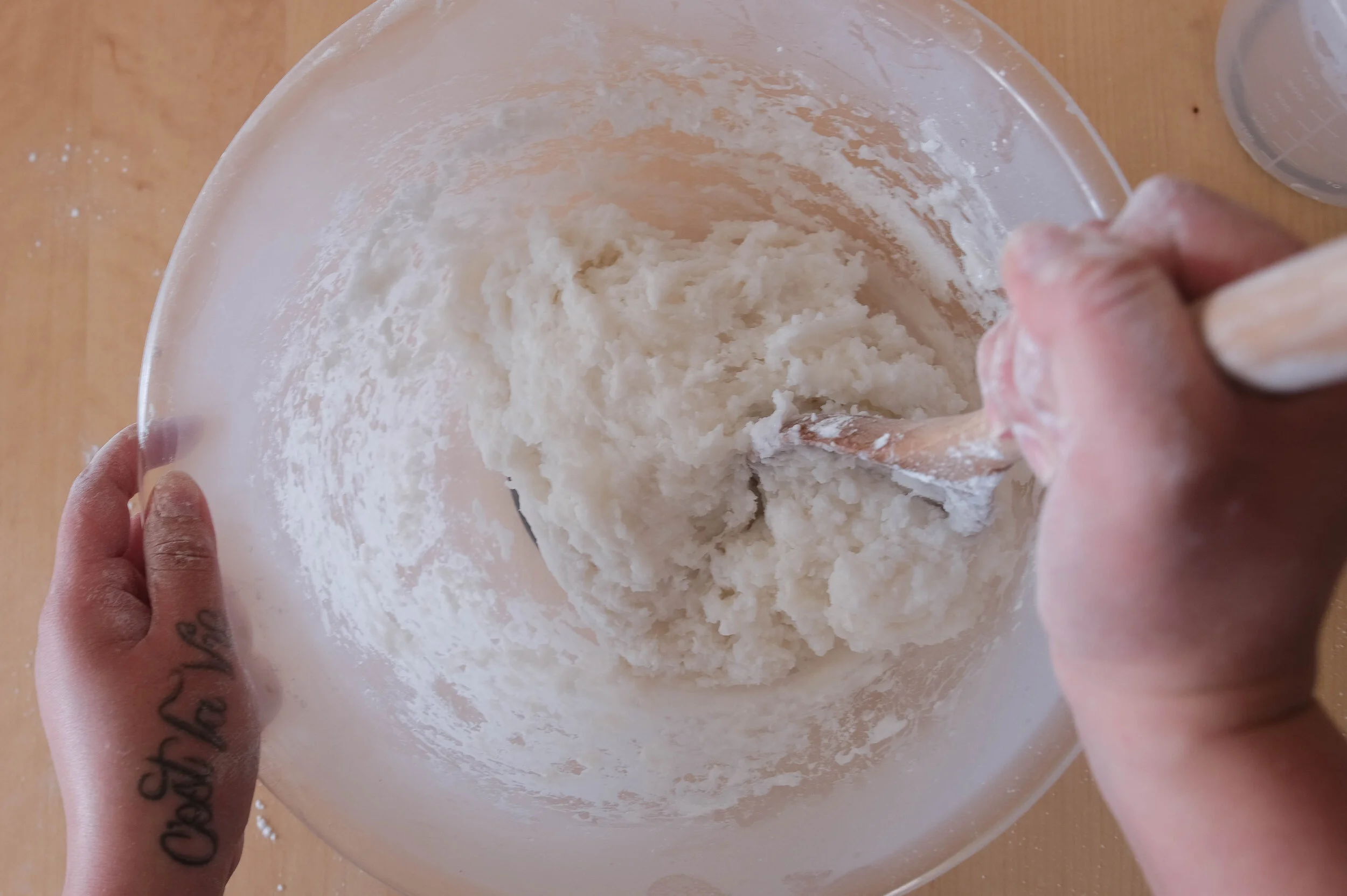
Using boiling water is a MUST otherwise your dough will not come together because it changes the structure of the tapioca starch. I know what you’re thinking, “how the hell am I supposed to knead dough that uses boiling hot water?” Don’t fret, it will cool as you knead. Start by mixing flour and water in the bowl with a wooden spoon. Gradually add water until everything just comes together, dust your work surface with flour (alternate tapioca and rice flours and prepare to use a lot), turn onto your work surface, and knead carefully like stepping barefoot on beach sand on a hot summer day. It’s ok to stop intermittently to scream, because I sure did!
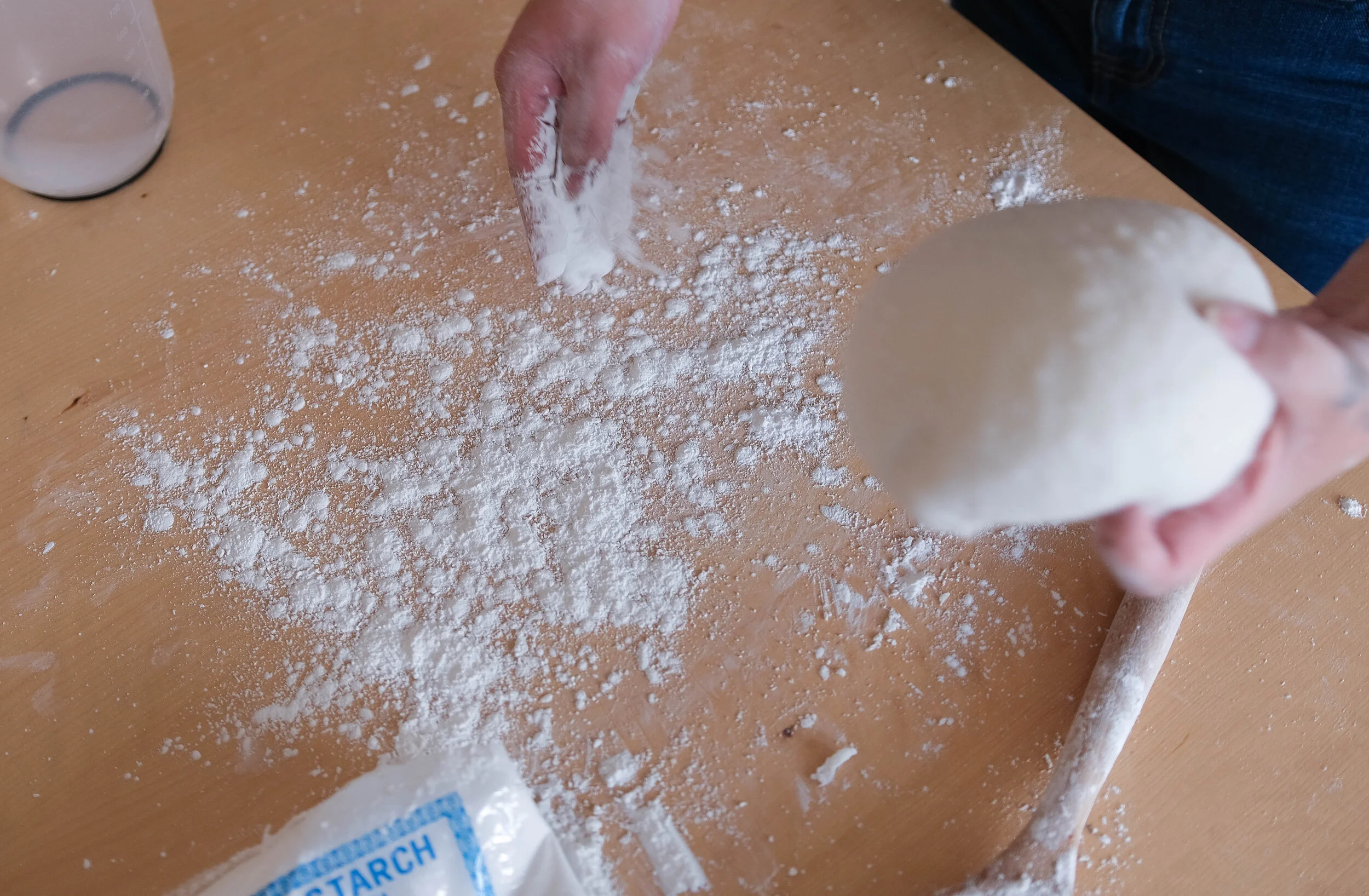
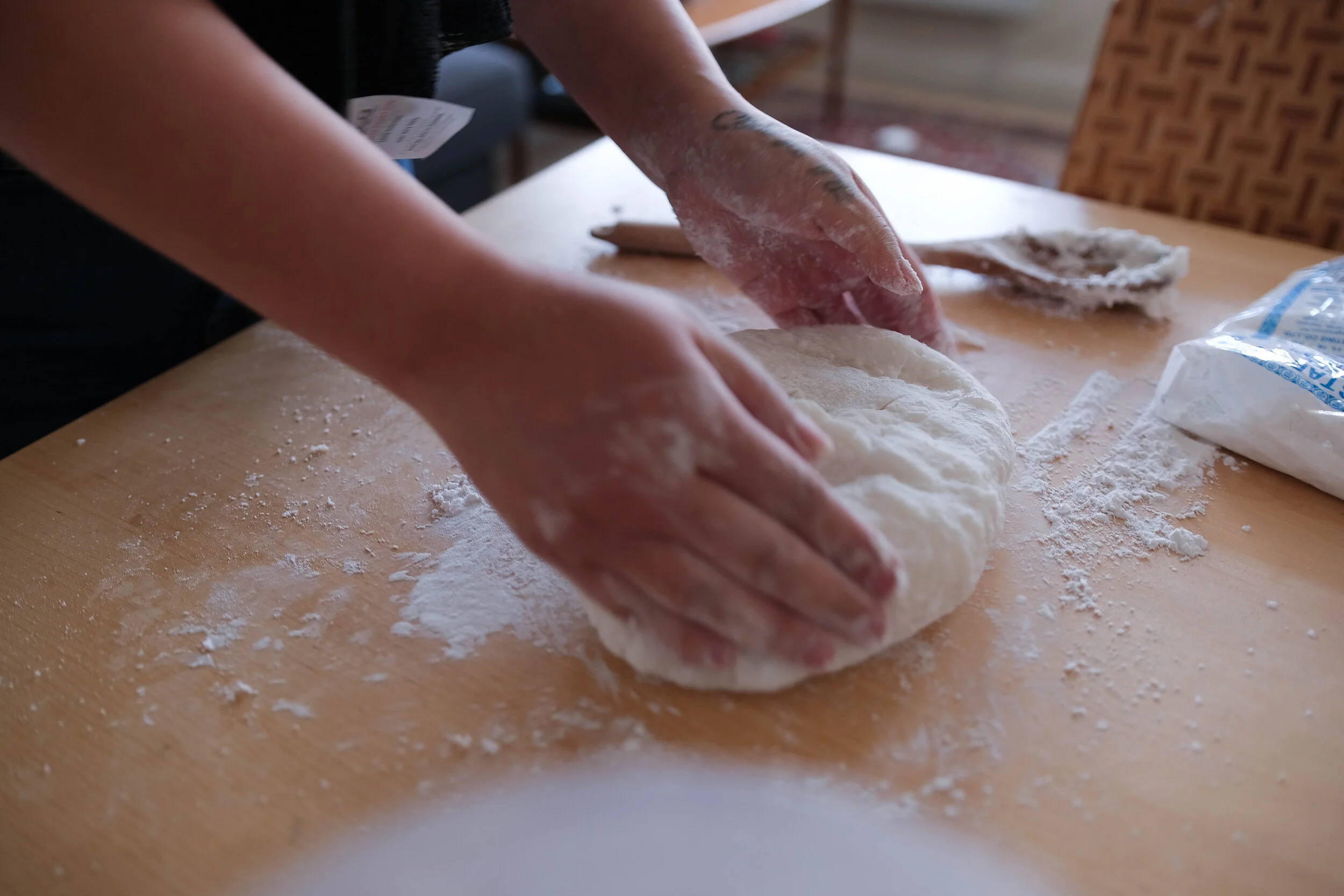
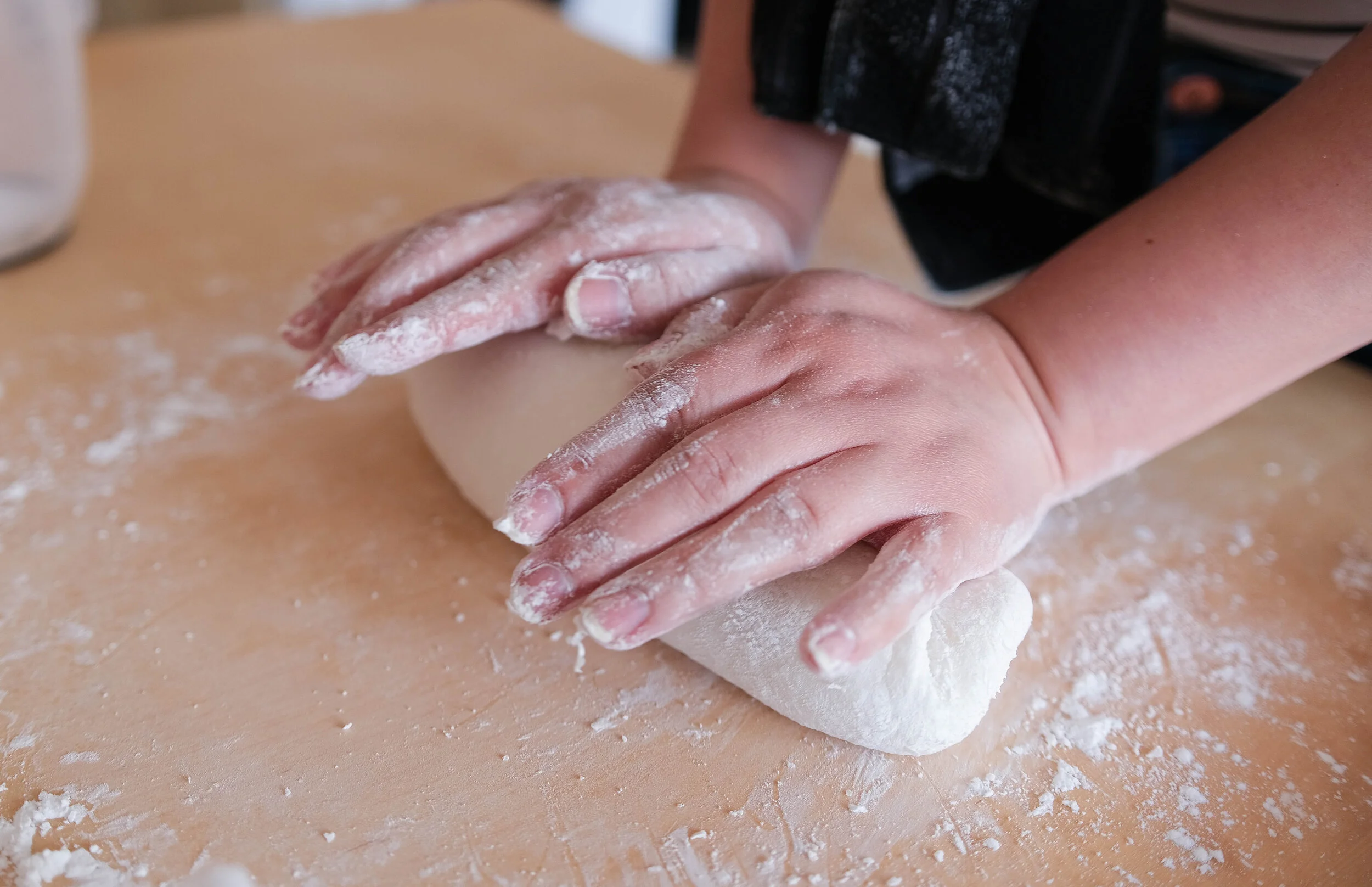
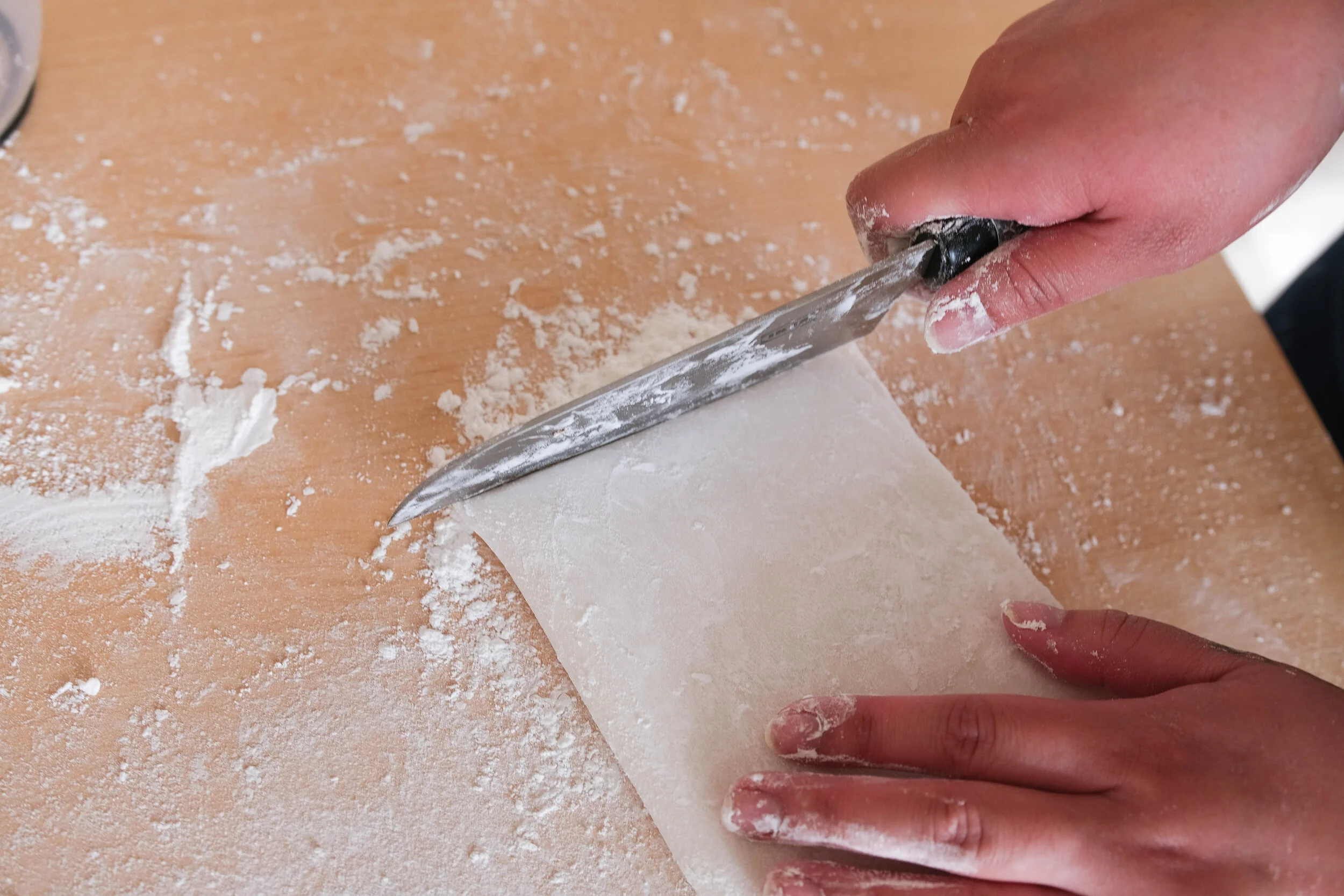
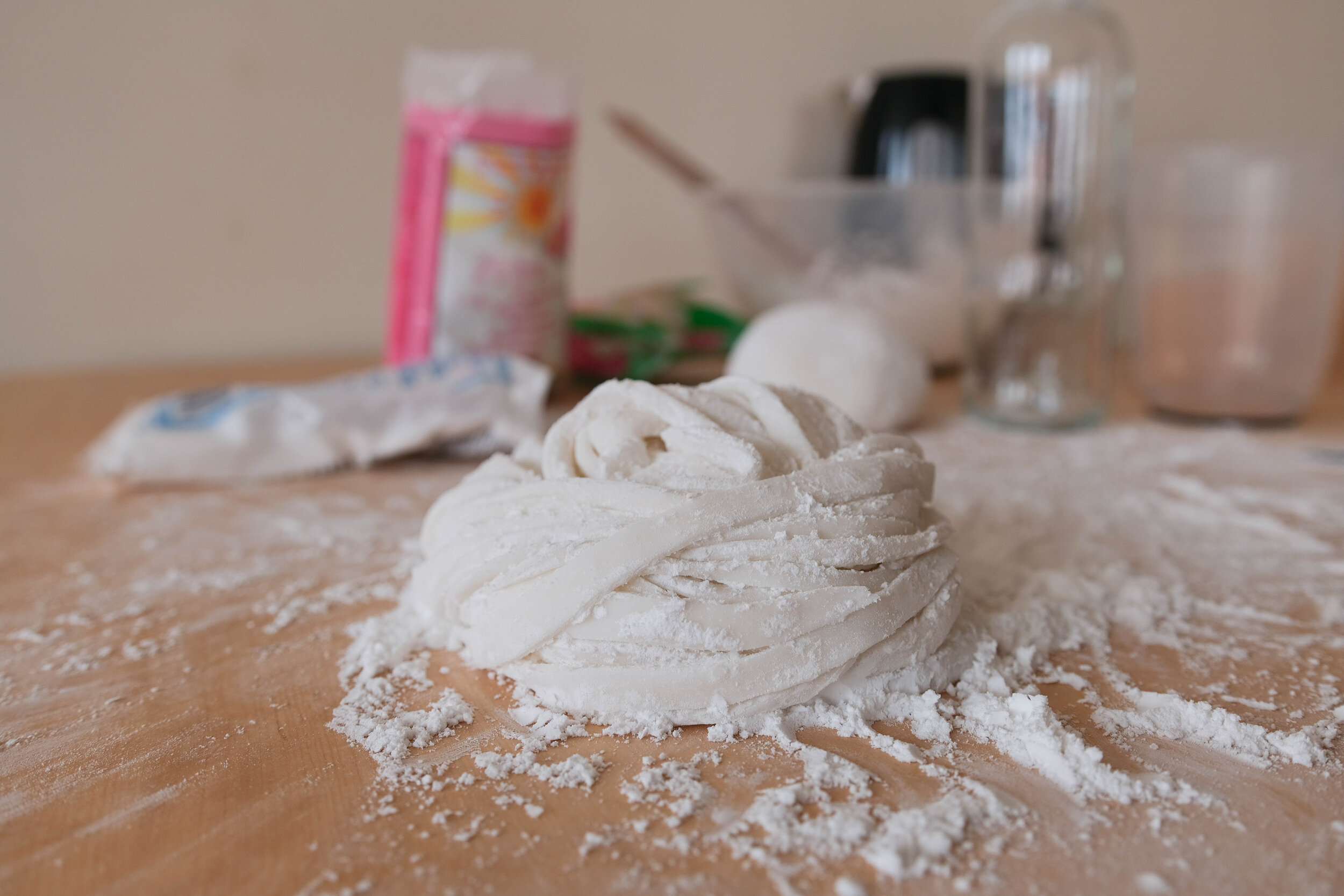
Dust with flour and knead until the dough is smooth and doesn’t stick in chunks to your hands or the surface, about 10-15 minutes. It will also become a little more firm as it cools so worry about over kneading if it’s feeling firm, tapioca flour and rice flour are gluten free so you’re not working any gluten like when making pasta. Once it all comes together, divide the dough in half, then roll out to about 5mm (abt ¼ of an inch) thick, dust with flour front and back, and gently fold in half or thirds to help you cut each noodle evenly. Use a super sharp knife and cut the width of the noodle as thick as you like, I prefer about 5mm, and dust each noodle with flour after cutting so it doesn’t stick to the others.
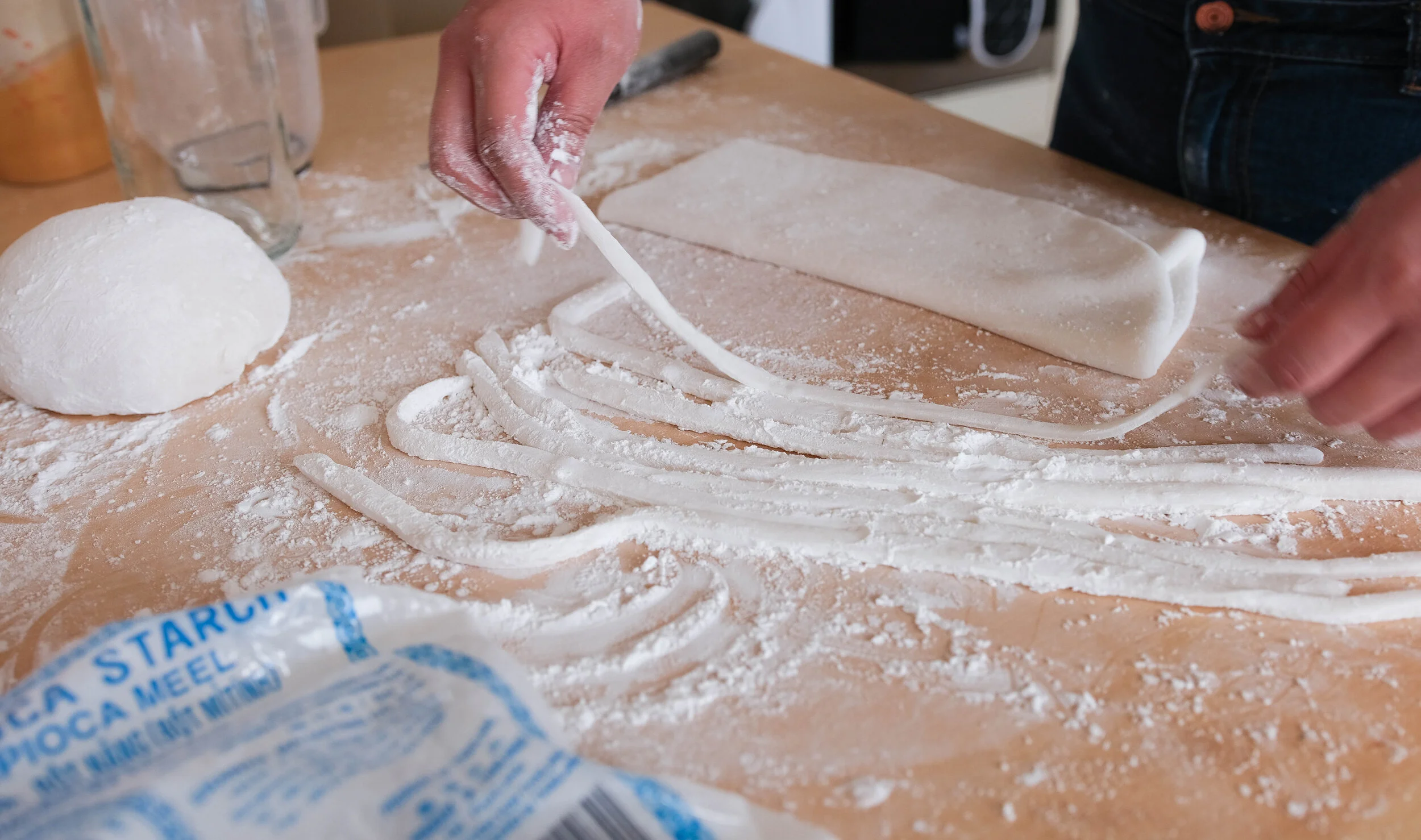
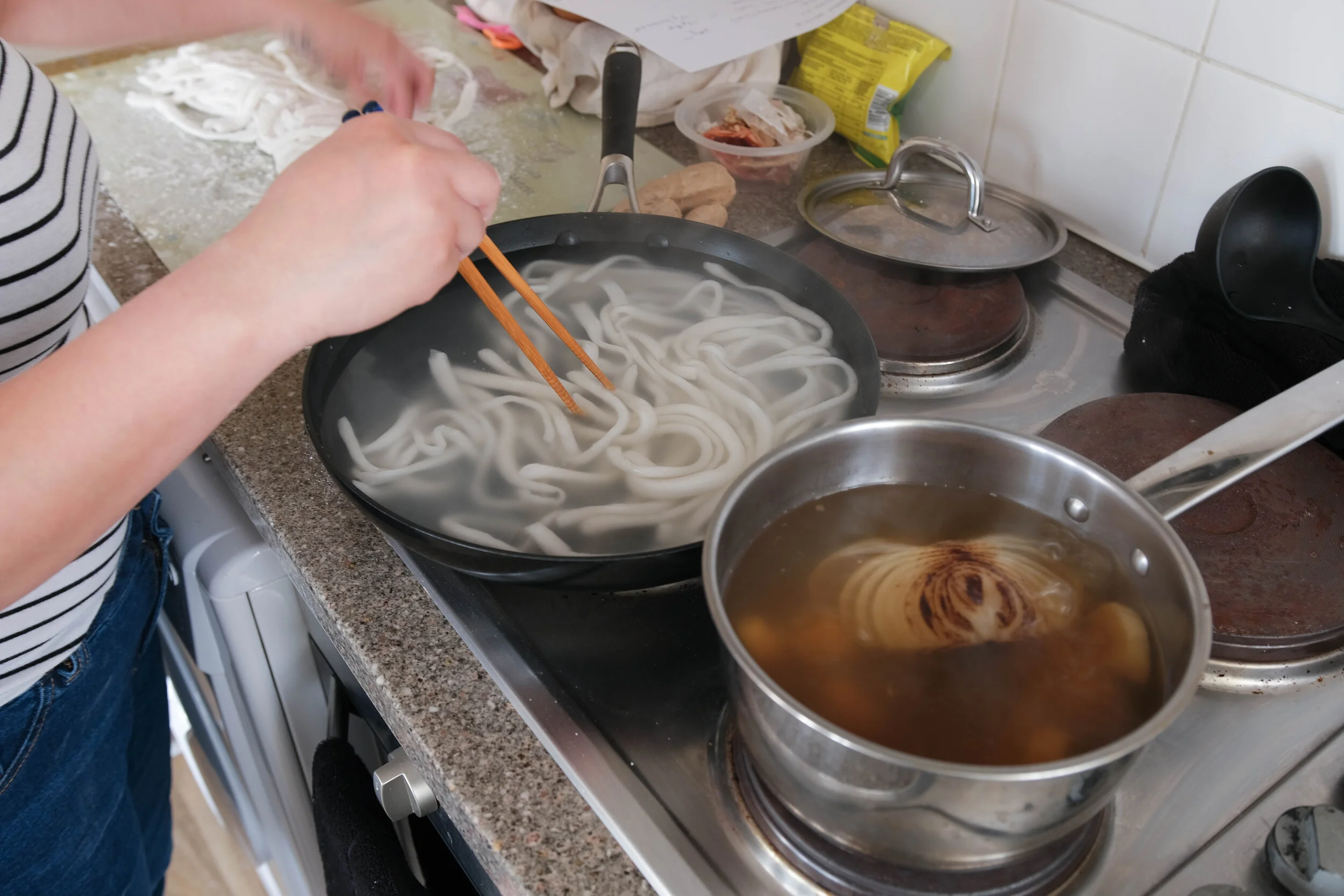
Bring a big pot (or pan, whatever you have available) of water to a boil. When you’ve got all your noodles ready gently put them in the pot of water, one serving at a time, and cook for about 1-2 minutes. To test doneness take a bite of a noodle, it should be chewy and a soft translucent white colour throughout, not bright white,. The pot of water will eventually become thick from the excess flour that coats the noodles so after about 2 servings of noodles you’ll want to add more water or change it out.
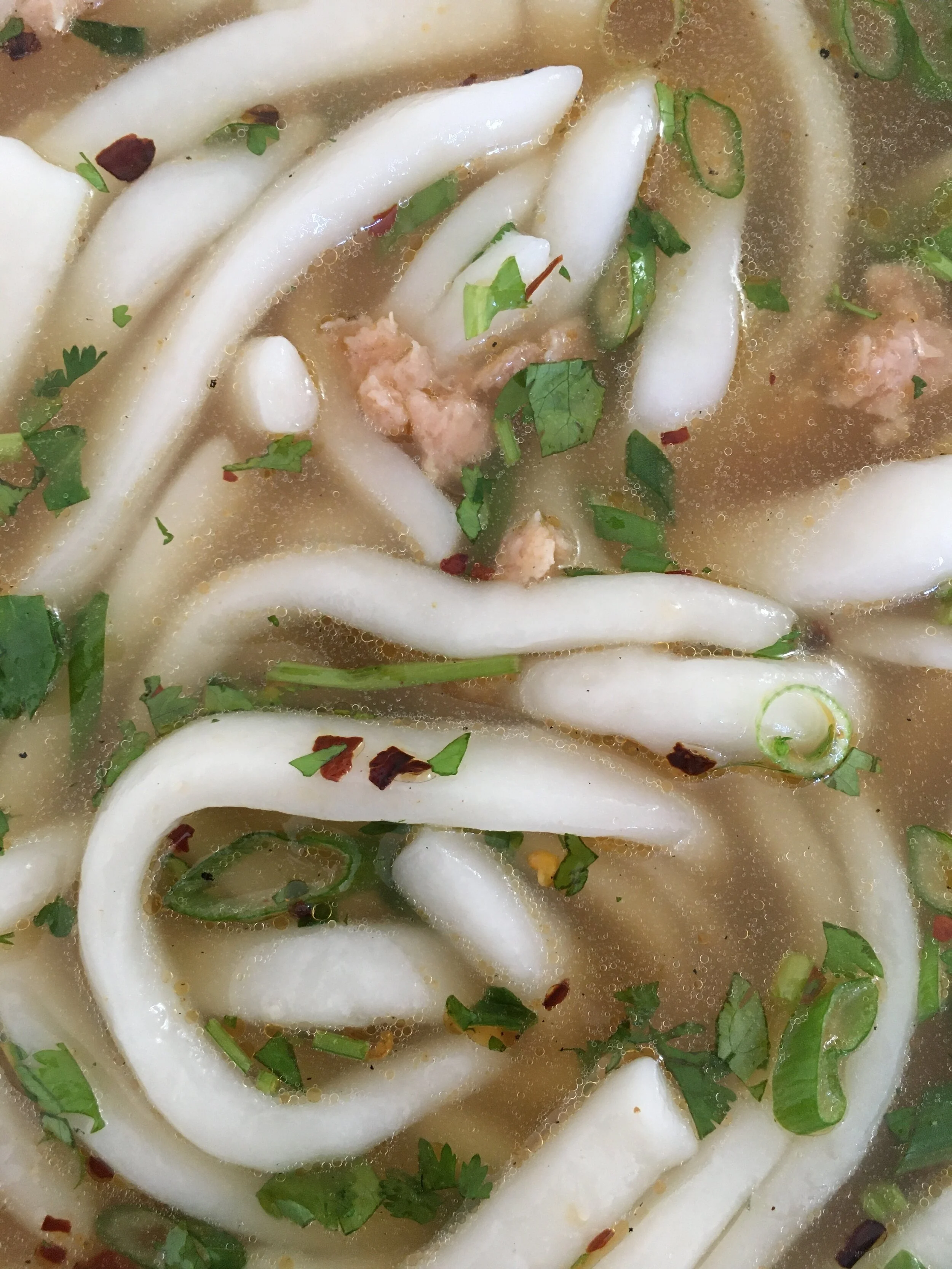
Once your noodles are done, bowl em’ up, and add the broth that’s been simmering away until it covers your noodles. Make sure you taste the broth before adding salt. Top with your choice of any of the following: soft boiled egg, vegetarian “meat”, soy sauce, oyster sauce, hoisin sauce, fish sauce, fried onions, fried garlic, wedge of lime juice, sriracha, chili oil, pepper, green onions/scallions, cilantro.
If you want to try making Khao Piak, Cooking with Nana has a real-deal recipe for you, she actually knows how to cook!